
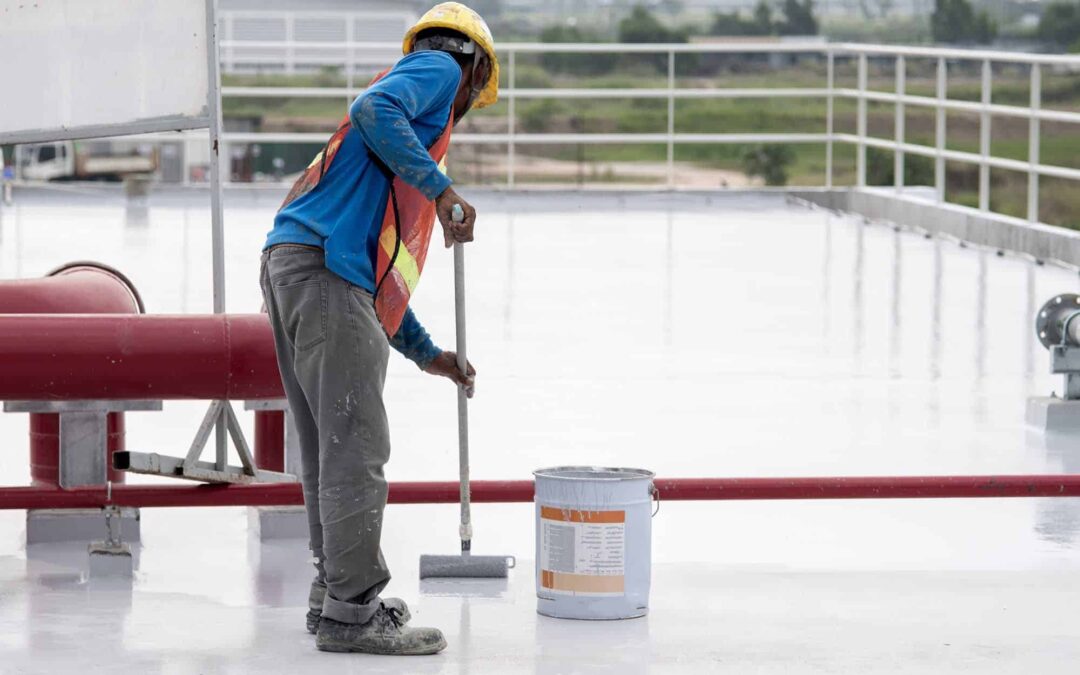
Commercial roof coatings are often presented as a newer alternative to roof replacement, but the basic idea has existed for generations.
For decades, roofing contractors have applied liquid materials to commercial roofs to protect them from sunlight, water and normal weathering. What has changed is the chemistry. Early coatings offered basic surface protection, while modern coating systems can form flexible, seamless and highly reflective membranes over a properly prepared roof.
One of the most important developments has been the introduction of modern silicone roof coatings.
Although these products are sometimes mistakenly called “silicon coatings,” the correct term is silicone roof coating. Silicone is a flexible polymer used to create a weather-resistant membrane after the liquid material cures.
Today’s high-solids silicone systems have improved roof restoration by offering better resistance to ultraviolet exposure, standing water and temperature changes. They have also expanded the number of commercial roofing systems that may be candidates for restoration.
However, silicone is not a shortcut or a universal solution. Its success still depends on a professional inspection, proper roof preparation, compatible materials and experienced installation.
What Is a Commercial Roof Coating?
A commercial roof coating is a liquid-applied material designed to cure into a continuous protective film over an existing roof surface.
Roof coatings are much thicker than ordinary paint. Once properly cured, elastomeric coatings can create a flexible membrane that helps bridge small cracks, reinforce vulnerable areas and protect the underlying roof from water, sunlight, chemicals and physical deterioration. The most common coating categories include asphalt, acrylic, polyurethane and silicone products.
Unlike a full roof replacement, a coating restoration may allow a building owner to preserve much of the existing roof assembly. Damaged areas are repaired, seams and penetrations are reinforced, and the coating is installed over the prepared surface.
That can reduce tear-off, debris, disruption and material use when the existing roof is still structurally sound.
The Early History of Roof Coatings
Asphalt and Bituminous Coatings
The earliest widely used commercial roof coatings were primarily bituminous materials made from asphalt or coal tar.
These materials were closely connected to traditional built-up roofing systems. Built-up roofs were constructed using multiple layers of roofing felt and bitumen, creating a durable assembly for low-slope commercial buildings.
Early asphalt coatings were used to help protect these roofs from moisture and weathering. They could also be applied as maintenance materials over aging surfaces, cracks and other vulnerable areas.
For much of the commercial roofing industry’s early history, hot-applied built-up roofing was the dominant choice for low-slope buildings. The installation process commonly involved heating asphalt in a roofing kettle and applying it between layers of roofing felt.
These systems could provide reliable protection, but the installation process required heat, specialized equipment and careful handling of hot materials.
The Development of Cold-Applied Systems
As roof coating technology developed during the middle of the 20th century, manufacturers and contractors began using cold-applied coatings and adhesives.
Instead of heating asphalt in a kettle, certain materials could be applied at ambient temperatures. Contractors discovered that some cold-applied coatings could be used to adhere roofing plies, helping reduce dependence on hot asphalt during installation.
Cold-applied products represented an important improvement in the roofing process. They helped simplify certain installations and opened the door for a wider variety of liquid-applied roofing materials.
The basic concept was beginning to change. A roof coating was no longer viewed only as a temporary maintenance product. It could become part of a broader roof restoration or membrane system.
Aluminum Coatings and the Push for Reflectivity
Traditional asphalt roofs are generally dark and can absorb significant amounts of solar heat. To address that problem, aluminum-pigmented asphalt coatings became a common option for built-up and metal roofs.
These coatings contain aluminum flakes that form a reflective surface as the material dries. The reflective finish helps protect the asphalt from ultraviolet exposure while reducing some of the heat absorbed by the roof.
Aluminum coatings were an important step forward, but they still had limitations. Application conditions could affect the finished appearance and performance. Moisture before the coating fully dried could create problems, while extremely high temperatures could cause the coating to dry too quickly.
Nevertheless, aluminum coatings helped establish a principle that remains important today: a roof coating could do more than cover an old surface. It could improve the way the roof responded to sunlight and heat.
The Rise of Elastomeric Roof Coatings
During the second half of the 20th century, synthetic polymer technology led to the development of more advanced elastomeric coatings.
An elastomeric coating is designed to stretch and recover as the roof moves. Commercial roofs regularly expand and contract as temperatures change. A rigid material may crack under that movement, while a properly formulated elastomeric coating can remain flexible.
Synthetic resins such as acrylics, urethanes and other polymers improved characteristics including elasticity, low-temperature flexibility and chemical resistance.
Acrylic Roof Coatings
Acrylic coatings became popular because they were water-based, reflective and relatively easy to apply. White acrylic coatings could help protect roof surfaces from ultraviolet exposure and reduce heat absorption.
Acrylic polymers became widely used in both low-slope and steep-slope roofing products, including field-applied coatings.
Acrylic coatings remain a useful option for many commercial roofs. However, they generally need favorable drying conditions during installation. Their long-term performance can also be affected by areas that hold water for extended periods.
Polyurethane Roof Coatings
Polyurethane coatings added another level of toughness and abrasion resistance. Depending on the formulation, they can be useful in areas exposed to foot traffic, hail, mechanical activity or other physical stresses.
Polyurethane products often became part of multilayer systems, with one material used as a base coat and another used as a weather-resistant topcoat.
These acrylic and polyurethane developments significantly improved roof coating performance. Still, the industry continued searching for products that could provide strong ultraviolet resistance, greater water resistance and a more forgiving curing process.
That search helped expand the use of silicone.
How Modern Silicone Coatings Improved Roof Restoration
Silicone roof coatings were initially associated heavily with spray polyurethane foam roofing. ASTM’s silicone coating specification still reflects that history in its title, although silicone products are now used over a much wider variety of commercial roof substrates.
Modern silicone coatings have improved the restoration process in several important ways.
1. Better Resistance to Ponding Water
Ponding water is water that remains on a low-slope roof after rainfall instead of reaching a drain, scupper or gutter.
No roof should be designed to hold water unnecessarily, and drainage problems should always be investigated. However, minor ponding conditions are common on aging commercial roofs.
Silicone coatings generally provide stronger resistance to prolonged water exposure than many earlier coating technologies. Modern silicone products are specifically formulated to protect against leaks associated with ponding water and wet rooftop conditions.
This does not mean contractors can ignore poor drainage. Clogged drains, improper slope, damaged insulation and structural deflection still need to be addressed. Silicone simply gives qualified roof systems another layer of protection where water exposure is a concern.
2. Strong Ultraviolet Resistance
Ultraviolet radiation can gradually break down many roofing materials. Over time, a roof may become brittle, chalky, cracked or less flexible.
Silicone chemistry is naturally resistant to ultraviolet exposure. Modern silicone products are designed to maintain their flexibility and weathering performance through extended exposure to direct sunlight. Manufacturer data sheets describe resistance to ultraviolet radiation, ozone, temperature extremes and long-term weathering.
This UV stability is one of silicone’s biggest advantages. The coating protects the underlying roof membrane from direct solar exposure, helping slow further surface deterioration.
3. Moisture-Cure Technology
Many modern silicone coatings cure by reacting with moisture in the surrounding air.
This is different from water-based acrylic coatings, which cure primarily as water evaporates. Because silicone uses moisture as part of its curing reaction, certain products can become rain-resistant relatively quickly after application.
Faster rain readiness can give professional contractors a larger and more manageable installation window. That is particularly helpful in climates where unexpected rain can interrupt roofing work.
The roof surface must still meet the manufacturer’s installation requirements. The existing roof normally needs to be clean, dry and free of trapped moisture before the coating is applied.
4. High-Solids Formulations
Earlier coating systems often required several layers to achieve the specified dry-film thickness.
Many modern silicone products are high-solids formulations. This means a larger percentage of the liquid material remains on the roof after curing, rather than evaporating into the atmosphere.
Some high-solids silicone coatings can be installed at substantial thicknesses in one coat, depending on the roof, specification and manufacturer requirements. This can reduce the number of application steps and help contractors install the required material more efficiently.
A one-coat product does not mean a one-step project. Seams, penetrations, drains, curbs, fasteners, flashing details and damaged areas still require preparation and treatment before the field coating is installed.
5. A Seamless Finished Surface
Commercial roofs contain numerous vulnerable areas, including:
- Membrane seams
- Fasteners
- Roof drains
- Scuppers
- Equipment curbs
- Pipe penetrations
- Expansion joints
- Perimeter flashing
- Previous repair areas
During a silicone restoration, these areas are repaired and detailed before the coating is installed across the roof.
Because the coating is fluid-applied, it can cure into a continuous membrane without the field seams found in many sheet roofing systems. The result is a flexible, monolithic surface over the existing roof.
This seamless finish can help reduce the number of exposed pathways through which water could reach the underlying assembly.
6. Compatibility With More Existing Roof Types
Modern silicone systems can be used over a wide variety of qualified commercial roof surfaces.
Depending on the manufacturer, system and preparation requirements, approved substrates may include:
- TPO
- PVC
- EPDM
- Metal roofing
- Built-up roofing
- Granulated asphalt surfaces
- Structural concrete
- Spray polyurethane foam
- Previously coated roofs
Product specifications from major manufacturers now list silicone applications over several of these substrates, showing how far the technology has expanded beyond its original concentration in spray foam roofing.
Compatibility should never be assumed. Adhesion tests, manufacturer requirements and substrate-specific primers may be necessary before installation.
7. Improved Reflectivity
White silicone roof coatings can provide high solar reflectance and thermal emittance.
Solar reflectance measures how much solar energy a surface reflects. Thermal emittance describes its ability to release absorbed heat. Together, these properties influence how hot a roof becomes when exposed to sunlight.
A highly reflective roof surface can remain cooler than a dark roof under similar conditions. Depending on the building, climate, insulation and HVAC system, that may help reduce cooling demands and improve indoor comfort.
Energy savings should not be guaranteed without evaluating the specific building. Roof area, insulation levels, energy costs, building use and local climate all affect the final result.
How the Silicone Coating Process Works
The quality of a silicone restoration depends as much on preparation as it does on the coating itself.
A professional process generally includes the following stages.
Roof Inspection and Qualification
The contractor must first determine whether the roof is a suitable candidate.
This may involve visual inspections, repair-history reviews, test cuts, core samples, adhesion tests or moisture scans. Areas of wet insulation or deteriorated decking need to be identified and addressed.
A coating should not simply be installed over trapped moisture, active leaks or serious structural deterioration.
Cleaning and Surface Preparation
The roof must be thoroughly cleaned to remove dirt, oils, biological growth, loose coating, chalking and other contaminants that could prevent adhesion.
Roof Coatings Manufacturers Association guidance emphasizes that cleaning and drying are critical to a successful coating application. A primer cannot compensate for an improperly prepared surface.
Repairs and Detail Work
Before applying the field coating, the contractor must repair defects in the existing roof.
That may include replacing wet insulation, securing loose membrane, repairing flashing, treating seams, replacing fasteners, sealing penetrations and correcting damaged drainage components.
Manufacturer instructions commonly require damaged membrane, flashings and penetrations to be repaired before the coating is installed.
Adhesion Testing and Priming
Test patches help determine whether the silicone will bond properly to the existing roof.
Some substrates require primers, while others may accept the coating directly after cleaning and preparation. The correct approach depends on the roof material, its condition and the manufacturer’s tested system.
Silicone Application
The coating may be applied by spray equipment, roller, brush or squeegee, depending on the product and project conditions.
The contractor must monitor coverage rates and wet-film thickness throughout the installation. Applying too little material can prevent the finished roof from reaching its intended performance level.
What Silicone Coatings Cannot Fix
Silicone coatings have improved commercial roof restoration, but they cannot solve every roofing problem.
A coating is not a substitute for:
- Replacing saturated insulation
- Repairing deteriorated roof decking
- Correcting structural movement
- Rebuilding failed flashing
- Securing loose metal panels
- Correcting serious drainage defects
- Replacing a roof that has exceeded its repairable condition
Manufacturer installation requirements typically call for positive drainage, a clean and dry substrate, no trapped moisture, completed repairs and adhesion testing before coating begins.
Silicone surfaces may also become slippery when wet. Designated walkways or nonslip granules may be needed around equipment and other areas that receive regular foot traffic.
The goal should never be to coat every old roof. The goal is to identify roofs that can be responsibly restored and avoid recommending a replacement before it is truly necessary.
Is a Silicone Roof Coating Right for Your Building?
A silicone coating may be worth evaluating when:
- The existing roof is structurally sound.
- Most of the insulation remains dry.
- The membrane is weathered but repairable.
- Leaks are concentrated around identifiable details.
- The building owner wants to delay replacement.
- Tear-off would significantly disrupt operations.
- Reflectivity and surface-temperature reduction are priorities.
- Ponding-water resistance is an important concern.
- The roof has enough remaining integrity to support restoration.
The only reliable way to make that decision is through a professional roof assessment.
A qualified commercial roofing contractor should document the roof’s condition, identify wet or damaged areas, test compatibility and explain the difference between maintenance, repairs, restoration and replacement.
Roof Coatings Have Come a Long Way
Roof coatings began as relatively simple asphaltic materials used to protect and maintain traditional commercial roofs.
Over time, cold-applied products reduced dependence on hot asphalt. Aluminum coatings added reflectivity. Acrylic and polyurethane technologies improved flexibility, color options, durability and weather resistance.
Modern silicone coatings have moved the industry another step forward.
Their resistance to ultraviolet exposure and ponding water, combined with moisture-cure chemistry, high-solids formulations and compatibility with several roof types, has made silicone an important option for commercial roof restoration.
The technology may be newer, but the objective remains the same: protect the building and extend the useful life of the roof.
Commonwealth Roofing Corp. evaluates each roof individually. When a roof can be responsibly restored, our team can use inspections, targeted repairs, maintenance and professional coating systems to help delay replacement. When coating is not the correct option, we explain why and recommend a solution based on the roof’s actual condition.
Safety, Service, & Quality — every day since 1981.
Louisville: (502) 459-2216
Hebron: (859) 943-0012
Service: (888) 818-4842