When a commercial roof starts leaking, people naturally blame the weather.
Heavy rain.
High winds.
Hail.
Age.
But there is another source of commercial roof damage that doesn’t get nearly as much attention:
People.
More specifically, the people who need access to your rooftop but aren’t there to work on the roof.
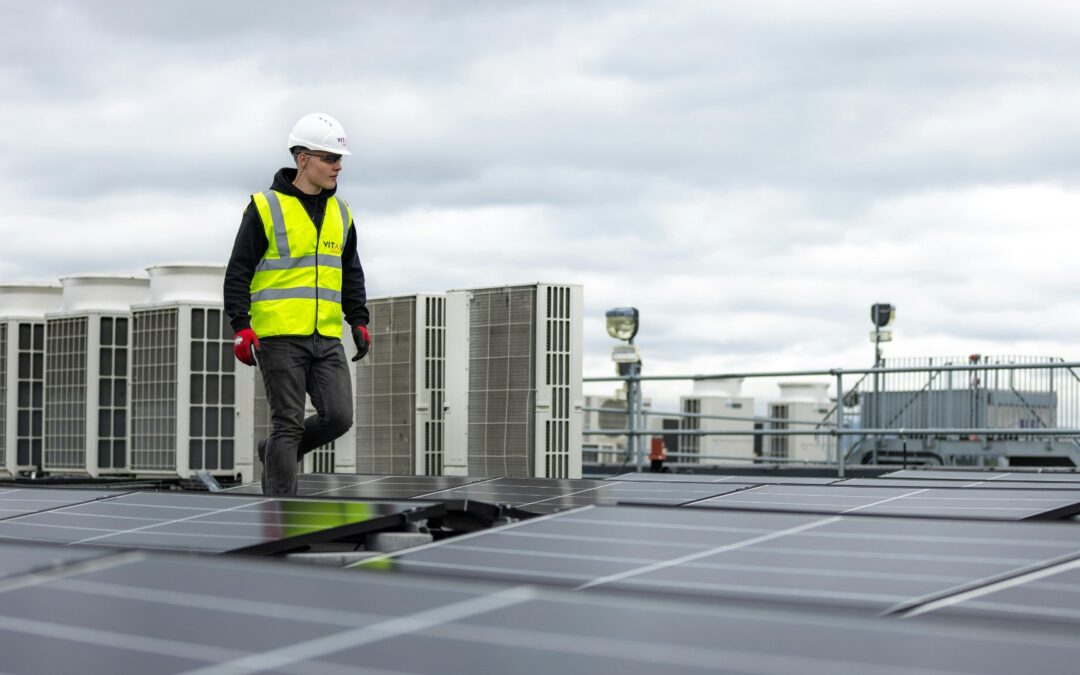
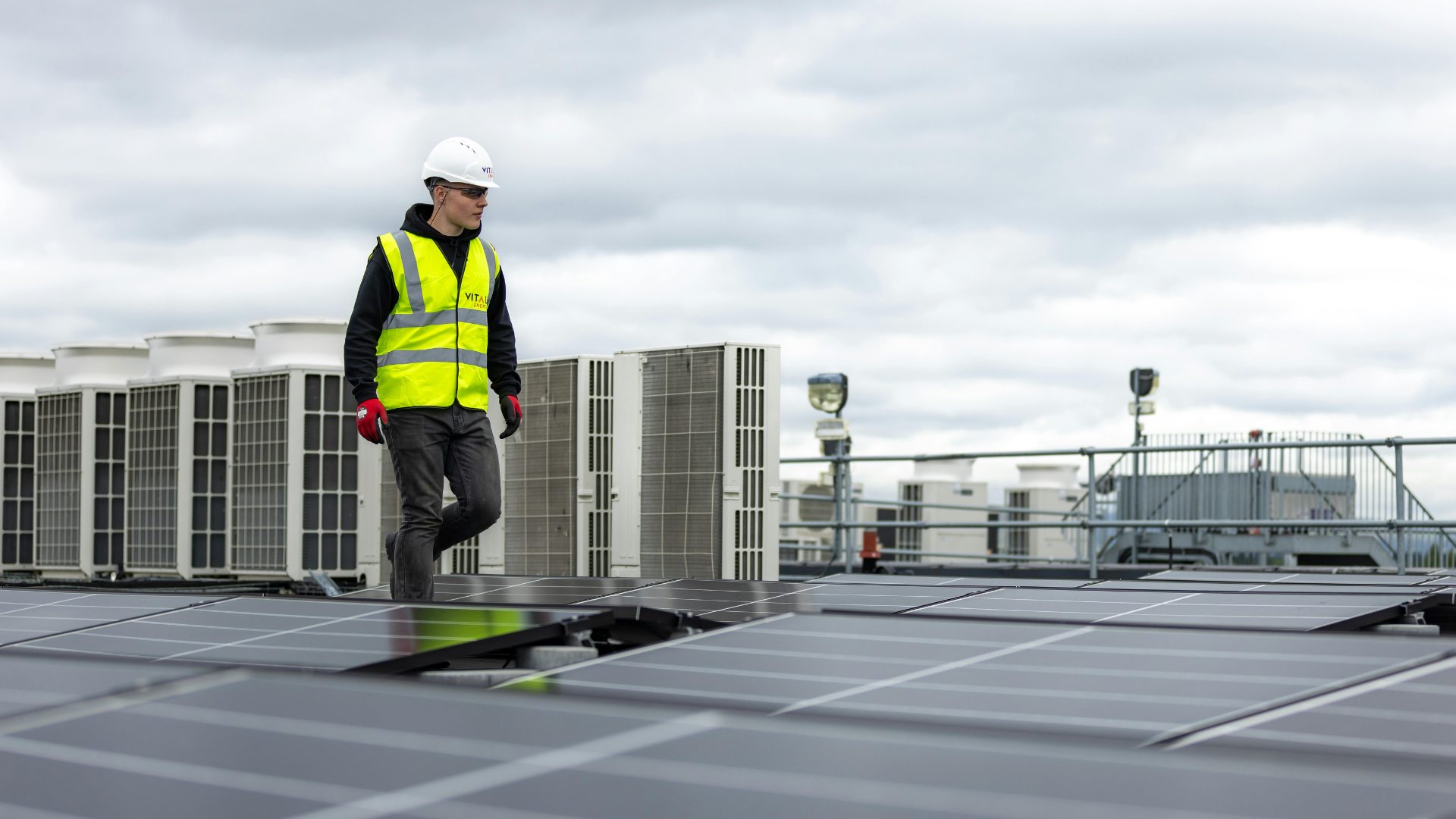
HVAC technicians, electricians, telecommunications contractors, maintenance personnel and other trades may walk across a commercial roof throughout the year.
Every visit creates another opportunity for accidental roof damage.
Your Roof May Be a Workplace for Several Different Trades
Modern commercial roofs can contain a surprising amount of equipment.
Depending on the building, you may have:
- HVAC systems
- Exhaust fans
- Electrical equipment
- Communication equipment
- Satellite equipment
- Solar panels
- Pipes
- Vents
- Mechanical systems
All of that equipment requires maintenance.
And maintenance requires people to reach it.
That means some commercial roofs experience far more foot traffic than building owners realize.
Roofing manufacturers specifically account for this issue. GAF, for example, recommends walkway materials to protect membranes around rooftop traffic areas such as HVAC equipment, roof hatches and access doors.
One Dropped Tool Can Become a Roof Leak
A commercial membrane may look tough, but that doesn’t mean it is immune to damage.
Imagine an HVAC technician servicing a unit.
A screwdriver slips.
A piece of sheet metal gets dragged.
A heavy component is placed directly on the roof.
A cart rolls across an unprotected section of membrane.
Nothing dramatic happens.
Nobody notices anything.
The technician finishes the job and leaves.
Months later, the building develops a leak.
Commercial roofing guidance specifically identifies dropped tools, carts and maintenance traffic around rooftop equipment as potential sources of membrane damage.
The frustrating part?
The source of the leak may have occurred long before anyone discovered the water.
Repeated Traffic Can Be Just as Important
Not every problem comes from one obvious puncture.
Repeated foot traffic can gradually wear areas of a roof.
Think about the route from the roof hatch to your most frequently serviced HVAC unit.
If technicians follow that same path every month, that small section of roof experiences far more activity than the rest of the membrane.
Manufacturers use walkway pads specifically to protect high-traffic areas and create designated routes to rooftop equipment.
In other words, where people walk matters.
The Roof Hatch Deserves Extra Attention
One of the most overlooked areas on a commercial roof is the access point itself.
Everyone who goes onto the roof usually steps onto the same small area.
Tools are placed there.
Materials are carried through it.
Workers turn, step and reposition equipment there.
Industry guidance notes that roof entry points commonly experience heavier loads and may benefit from additional membrane protection.
During an inspection, these heavily traveled areas deserve attention.
HVAC Work Can Create Another Hidden Risk
The membrane isn’t the only concern.
Mechanical service work can sometimes introduce materials that don’t belong on the roof surface.
Coolants, oils, grease or other substances from rooftop equipment can potentially affect certain roofing materials.
GAF’s commercial maintenance guidance recommends watching for spills around rooftop equipment in addition to minimizing unnecessary roof traffic.
That’s another reason regular inspections should include the areas surrounding HVAC units and other mechanical equipment.
Walkways Can Help Control Traffic
One simple way to protect a heavily traveled roof is to give people a clearly defined route.
Walkway pads can:
- Direct technicians toward rooftop equipment
- Reduce unnecessary traffic across the membrane
- Protect frequently traveled areas
- Provide additional protection around serviceable equipment
- Help identify the preferred path across the roof
They aren’t appropriate for every situation, and their design should be compatible with the roofing system.
But on roofs that regularly host other trades, they can be an important part of the overall roof strategy.
Keep Track of Who Goes Onto the Roof
Another simple idea receives surprisingly little attention:
Keep a roof access log.
Record:
- Who accessed the roof
- Why they were there
- What equipment they serviced
- Where they worked
- When they entered
- Whether anything unusual occurred
GAF’s maintenance recommendations specifically suggest maintaining records of who accessed or performed work on the roof.
Why does that matter?
Imagine your roof was inspected in May and looked fine.
An outside contractor worked near an HVAC unit in June.
A leak developed underneath that same area in July.
That timeline can give your roofing contractor valuable information when diagnosing the problem.
Have the Roof Checked After Major Rooftop Work
If contractors complete substantial HVAC, electrical, solar or mechanical work on your roof, consider having the surrounding roofing area inspected afterward.
The goal isn’t to blame another contractor.
It’s to catch accidental damage while it is still small.
A minor puncture discovered quickly may require a relatively simple repair.
Leave that same opening exposed through repeated rain events, and the problem can potentially extend beyond the membrane into insulation and other parts of the roofing assembly.
Preventive inspections are about finding problems before you discover them from inside the building.
Your Commercial Roof Is an Asset — Treat Access Accordingly
Building owners often carefully control access to mechanical rooms, electrical rooms and production areas.
The roof deserves the same consideration.
Know who’s accessing it.
Know where they’re walking.
Protect high-traffic areas.
Document rooftop work.
And inspect the roof regularly.
At Commonwealth Roofing Corp., our goal isn’t simply to respond when water begins dripping from the ceiling.
We want to help building owners and facility teams understand why roofing problems occur and identify opportunities to prevent them.
Sometimes the biggest threat to a commercial roof isn’t a massive storm.
It may be the path between the roof hatch and the air-conditioning unit.
Recognizing details like that is part of delivering Safety, Service & Quality — Every Day since 1981.
Louisville: (502) 459-2216
Hebron: (859) 943-0012
Service: (888) 818-4842