
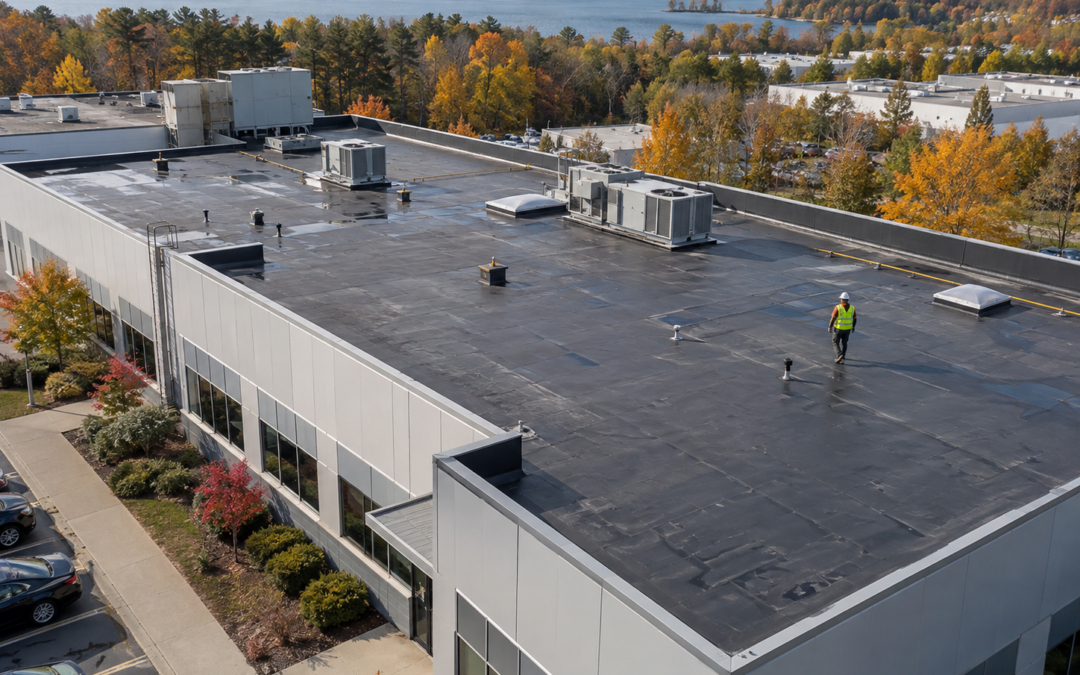
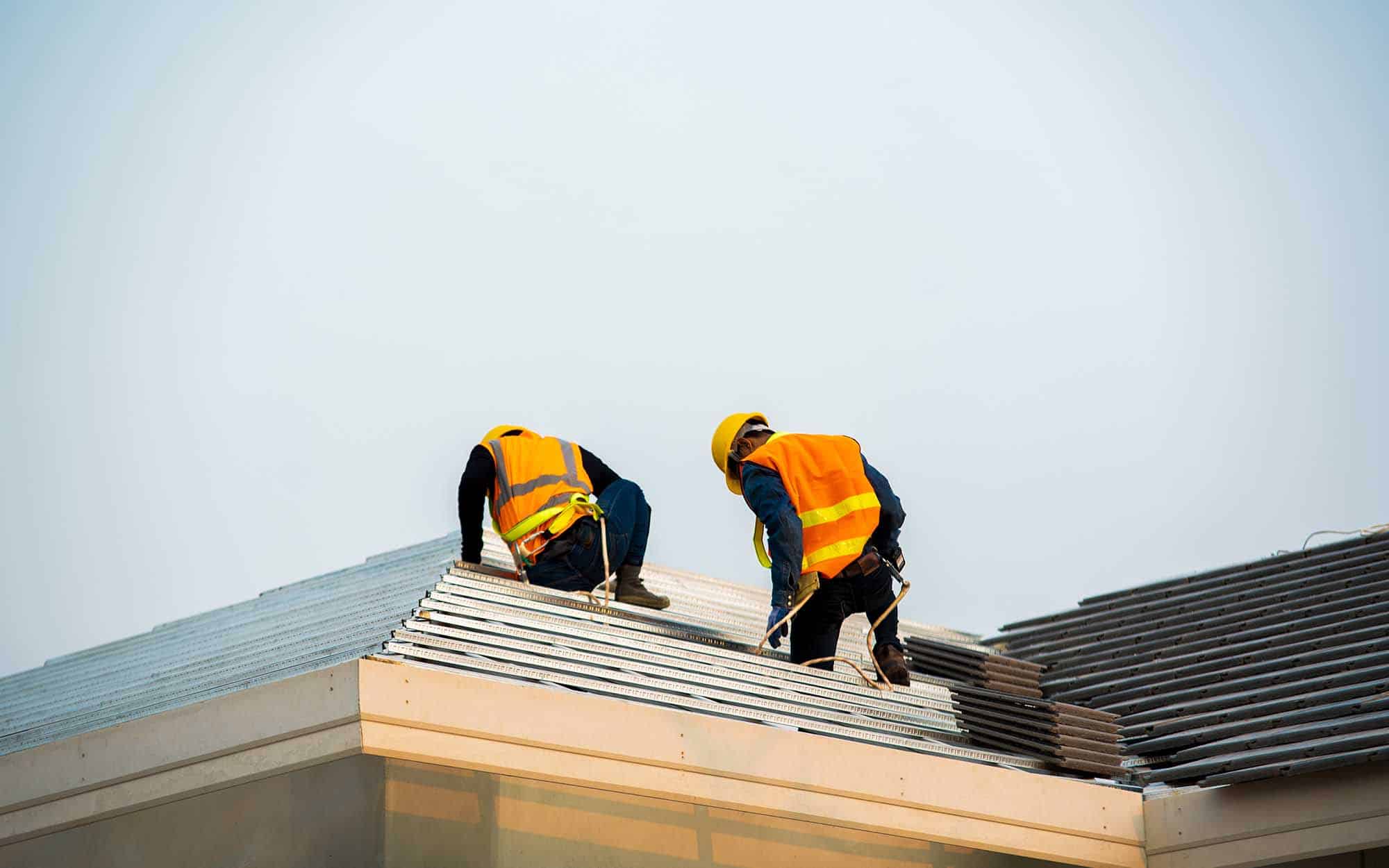
A commercial roof can look perfectly fine on a calm September afternoon and still be developing problems that may show up later in the year.
One reason is simple: your roof is constantly moving.
Roofing materials heat up during the day, cool down at night and respond to changes in the building beneath them. Manufacturers design commercial roofing systems to accommodate that movement, but years of weather, foot traffic, repairs and normal aging can make certain areas more vulnerable.
That makes early fall a valuable time to look closely at seams, flashings and penetrations — before colder weather arrives.
Your Roof Moves More Than You Think
Commercial roofs spend every day exposed to changing temperatures.
As the roof heats and cools, roofing components expand and contract. Some membranes are specifically engineered to accommodate this movement; for example, EPDM is designed to remain flexible through temperature fluctuations, while TPO and PVC systems rely on properly installed welded seams to create durable watertight connections.
The movement itself isn’t necessarily a problem.
The concern is what happens when an older or previously damaged area can no longer move the way it was designed to.
Seams Deserve Extra Attention
On TPO and PVC roofs, individual sheets of membrane are joined together with heat-welded seams.
When installed correctly, those seams create strong, watertight connections.
But seams are still worth inspecting as the roof ages.
A professional may look for areas that are beginning to separate, lift or show signs of previous repairs. Catching a small weakness before winter rain, snow and freeze-thaw conditions arrive can provide more repair options.
Flashing Has to Move Too
Roof edges aren’t the only places affected by movement.
Think about everything that interrupts a commercial roof:
HVAC units. Pipes. Vents. Parapet walls. Skylights. Drains.
Each one creates a transition where roofing material has to remain watertight while different parts of the building move independently.
That makes flashing one of the most important parts of a commercial roof inspection.
A tiny opening around a penetration may not look dramatic from a distance, but water does not need a dramatic opening to find its way into a roofing assembly.
Previous Repairs Tell a Story
Fall inspections are also a good time to revisit areas that have already been repaired.
A repair shouldn’t simply disappear from the maintenance plan once the leak stops.
Older patches, sealants and flashing repairs should periodically be checked to confirm they’re still performing properly.
If the same area requires repeated attention, that may also tell your roofing consultant something important about the underlying problem.
Watch Areas With Heavy Foot Traffic
Some portions of a commercial roof work harder than others.
Routes to HVAC units, roof hatches and mechanical equipment may experience considerably more traffic than the middle of the roof.
Repeated foot traffic can contribute to wear or punctures, especially when tools, equipment or materials are moved across the membrane.
During an inspection, those traffic patterns deserve close attention along with the seams and flashing nearby.
Drainage Still Matters
Temperature movement isn’t the only reason to inspect your roof in the fall.
Leaves and other debris will soon begin collecting around drains and low areas.
A roof that drains properly during summer can behave very differently when a drain becomes partially blocked.
Water that remains on the roof longer than intended can expose existing weaknesses around seams, flashings and penetrations.
That’s why roof inspections should look at the entire system — not just individual damaged areas.
Small Problems Are Easier to Manage Early
The best time to discover a questionable seam isn’t during a January rainstorm.
It’s before it becomes an active leak.
Routine commercial roof inspections can help identify clogged drains, storm damage, compromised seams and flashing problems before they create larger issues. Industry guidance also commonly recommends inspections in both spring and fall.
That doesn’t mean every issue requires replacement.
Depending on the condition of the roof, the solution may be cleaning, preventive maintenance, a targeted repair or another roof-life extension strategy.
Know What Your Roof Needs Before Winter
Commercial roofing decisions become much easier when you have good information.
An inspection can help answer questions such as:
Is the roof currently watertight?
Are seams and flashing still performing properly?
Are there areas that should be repaired before winter?
Is drainage working as intended?
How much service life may still remain?
At Commonwealth Roofing Corp., we believe the goal of an inspection isn’t to automatically recommend a new roof.
It’s to understand the condition of the roof you already have — and help you make the right decision for your facility.
Safety, Service, Quality — Every Day since 1981.
Louisville: (502) 459-2216
Hebron: (859) 943-0012
Service: (888) 818-4842