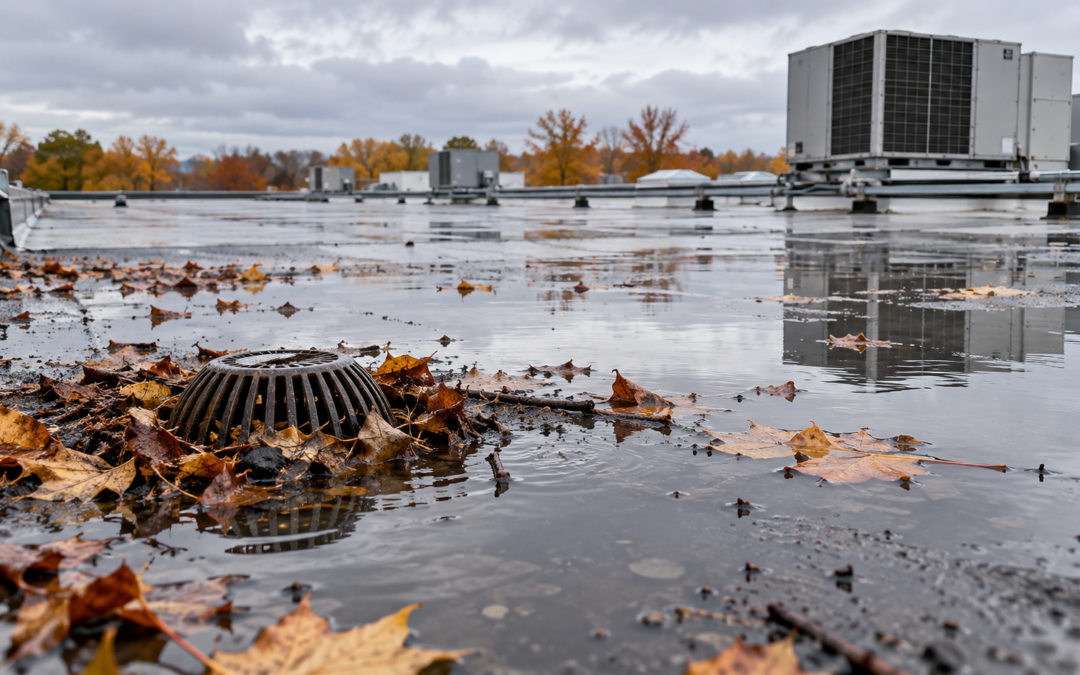
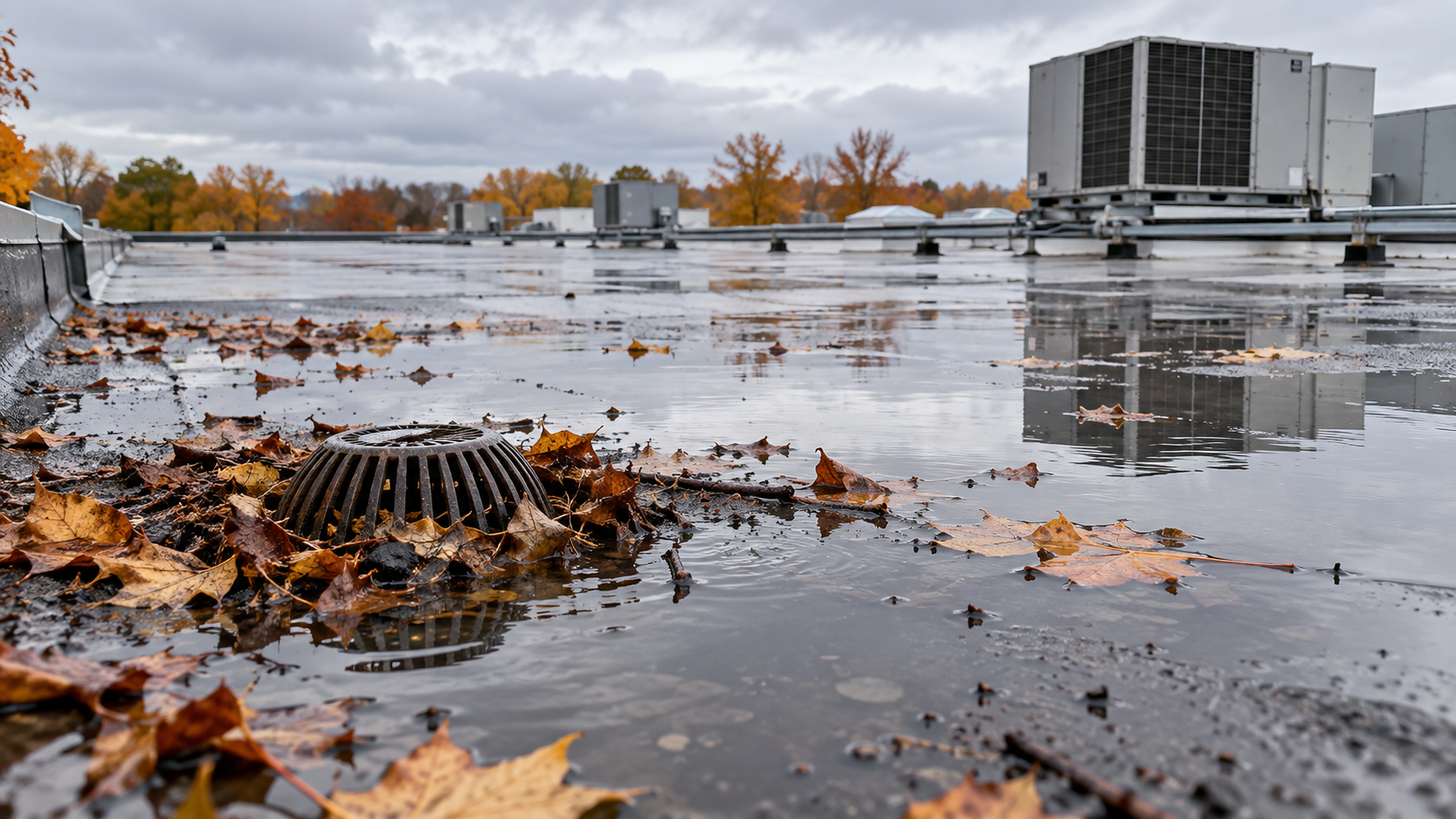
After a fall rain, take a look at your commercial roof.
Where did the water go?
That question becomes increasingly important as temperatures begin dropping.
Commercial low-slope roofs are designed to move water toward drains, scuppers and other drainage points. When leaves, dirt and rooftop debris interfere with that process, water can remain on the roof longer than it should.
During summer, that may be a drainage problem.
Going into winter, it can become something more serious.
Fall Creates the Perfect Storm for Clogged Roof Drains
Commercial roofs collect more debris than many building owners realize.
Leaves can be carried onto a roof by wind even when there are no large trees immediately beside the building.
Add twigs, dirt, discarded materials and other debris, and roof drains can quickly become restricted.
Once that happens, water begins backing up.
A relatively small pile of leaves around a drain can affect a much larger section of the roof.
Ponding Water Adds Weight
Water is heavy.
One inch of water weighs approximately 5.2 pounds per square foot.
That means standing water across a large section of a commercial roof can add a significant amount of weight to the roofing system and structure below.
While commercial buildings are designed to handle loads, unnecessary ponding water should never simply be ignored.
More importantly, standing water can expose weak areas of the roofing system that may otherwise have gone unnoticed.
Then Temperatures Drop
Fall drainage problems become more complicated when freezing temperatures arrive.
Standing water may freeze overnight and thaw as temperatures rise.
Then it can freeze again.
That repeated cycle can place additional stress on seams, flashings, penetrations and previous repairs.
Water can also work its way into very small openings before freezing and expanding.
An area that stayed dry during early fall may eventually become the source of a winter leak.
Ice Can Hide the Original Problem
Once water freezes on a commercial roof, identifying the source of the problem becomes more difficult.
A drainage issue may be hidden beneath ice.
A small membrane defect may be difficult to access.
Repair materials may also have temperature limitations that make certain work more challenging during colder weather.
That is why fall offers an important opportunity.
There is still time to correct many drainage and waterproofing issues before winter conditions limit your options.
Start With the Drains
One of the most valuable fall maintenance steps on a commercial roof is also one of the simplest: Make sure the drainage system can do its job.
That means checking:
-
Roof drains
-
Drain baskets
-
Scuppers
-
Gutters
-
Downspouts
-
Areas where debris commonly collects
Removing debris can sometimes solve an immediate problem.
But if water continues to remain on the roof after the drains are clear, there may be a larger drainage or roofing issue that deserves professional attention.
Pay Attention to Where Water Keeps Returning
A puddle after a heavy storm does not automatically mean your roof is failing.
Repeated ponding in the same location, however, deserves attention.
It may indicate:
-
Poor drainage
-
Low areas in the roof
-
Compressed insulation
-
Structural movement
-
Blocked drainage components
-
Previous repairs that are affecting water flow
Finding the reason matters.
Simply removing the water does not solve the condition that caused it.
A Small Fall Repair Can Prevent a Bigger Winter Problem
Many commercial roofing problems do not require immediate roof replacement.
A damaged flashing may be repairable.
A drain may need attention.
A seam may need to be corrected.
An aging section of membrane may be addressed before moisture spreads.
Finding and repairing those problems during fall can help extend the life of the existing roofing system while reducing the chance of an emergency leak during winter.
That is especially important for facilities where a roof leak could affect inventory, equipment, employees or production.
Use the Fall Window While You Have It
There is a limited period between falling leaves and sustained winter weather.
Commercial building owners and facility managers should use that window to make sure water is leaving the roof properly.
If you consistently see standing water, clogged drains or evidence of recurring leaks, Commonwealth Roofing Corp. can help determine the cause and recommend a practical solution.
The goal is not always to replace a roof.
Often, the better strategy is to identify problems early, make targeted repairs and keep the existing roof performing as long as possible.
Safety, Service, & Quality — every day since 1981.
Louisville: (502) 459-2216
Hebron: (859) 943-0012
Service: (888) 818-4842