Strong winds can take a serious toll on a commercial roofing system, even when the damage is not immediately visible from the ground.
For commercial property owners and facility managers, wind damage is especially important to understand because a roof does not have to be completely torn off to experience problems. High winds, repeated wind gusts, flying debris, and pressure changes around the edges and corners of a building can weaken roofing materials over time.
The earlier wind damage is identified, the better the opportunity to address it before a relatively small issue turns into a leak, damaged insulation, interior water intrusion, or a more expensive roofing project.
Here is what commercial building owners should know about how wind damages a roof, the warning signs to look for, and how proactive roof maintenance can help protect your property.
How Does Wind Damage a Commercial Roof?
Wind does not affect every part of a commercial roof equally.
As wind moves across and around a building, it creates different pressure zones. Roof edges, corners, parapets, flashing, penetrations, and other transitions can experience particularly strong forces.
When wind gets underneath a loose or vulnerable portion of a roofing system, it can create uplift. Over time, that uplift can loosen roofing materials, fasteners, flashing, insulation, and other components.
Depending on the roofing system and the severity of the storm, wind damage may include:
- Loose or displaced membrane
- Open seams
- Damaged flashing
- Loose edge metal
- Missing or damaged fasteners
- Punctures caused by wind-blown debris
- Damage around rooftop equipment and penetrations
- Displaced insulation
- Loose or damaged roof accessories
- Areas where roofing material has begun to lift or separate
In severe situations, sections of the roofing system can be pulled away from the building entirely.
However, some of the most important wind damage is much less obvious.
A seam may begin separating without immediately leaking. Flashing may become loose but remain in place. A membrane may experience stress that is difficult to see without a professional inspection.
That is why a roof can appear fine from the parking lot while still having storm-related damage that needs attention.
Signs of Wind Damage on a Commercial Roof
After a period of strong winds or severe weather, there are several warning signs building owners and facility managers should watch for.
1. Loose or Lifted Roofing Material
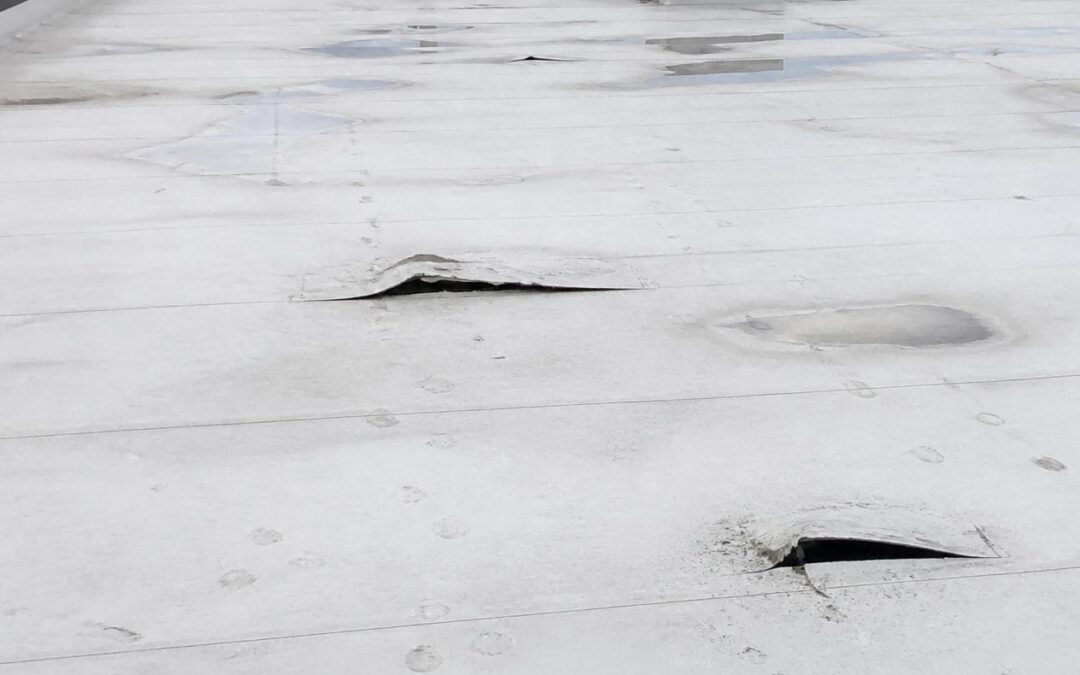
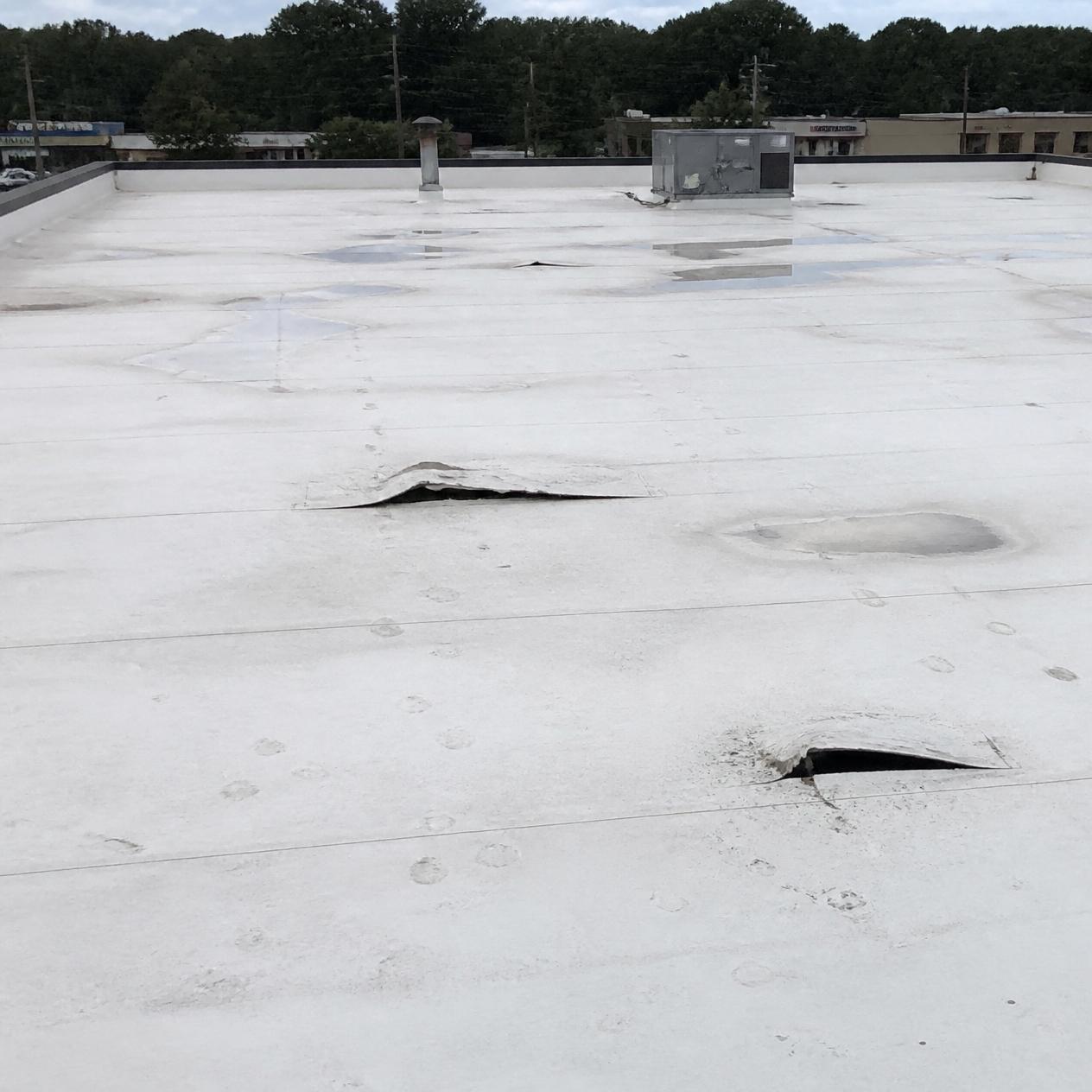
Sections of roofing material that appear raised, wrinkled, billowed, or displaced may indicate that wind has compromised the attachment of the roofing system.
This type of movement should be evaluated quickly because additional wind can continue to work underneath the affected area.
2. Damaged or Loose Flashing
Flashing protects some of the most vulnerable areas of your roof, including transitions, walls, curbs, penetrations, and edges.
High winds can loosen flashing or pull it away from the surfaces it is designed to protect. Once flashing becomes compromised, water can find a path into the roofing assembly.
3. Damage to Roof Edges and Corners
Roof perimeters and corners are particularly vulnerable to wind uplift.
Look for loose edge metal, missing components, separation, or other visible changes around the perimeter of the roof.
Because perimeter damage can contribute to larger sections of the roofing system becoming compromised, these areas deserve special attention after a wind event.
4. Open or Separated Seams
Commercial roofing systems often contain seams and transitions that must remain properly sealed.
Wind-related movement can place stress on these areas. A partially opened seam may allow moisture into the roof system even if there is not yet a noticeable leak inside the building.
5. Punctures From Wind-Blown Debris
Branches, loose construction materials, rooftop equipment components, signage, and other debris can become projectiles during strong winds.
A puncture in the roofing membrane may be relatively small but still allow water into the system.
6. Changes Around Rooftop Equipment
HVAC units, vents, pipes, skylights, curbs, and other penetrations create transitions in the roofing system.
Check for loose components, damaged flashing, displaced covers, or debris accumulation around these areas following strong winds.
7. Interior Signs of Water Intrusion
Sometimes the first indication of roof damage appears inside the building.
Watch for:
- Ceiling stains
- Wet ceiling tiles
- Dripping water
- Damp insulation
- Water near exterior walls
- Unexplained moisture or odors
Keep in mind that water does not always enter the building directly above where it becomes visible inside. Moisture can travel within a roofing assembly or along structural components before appearing indoors.
Why Small Wind Damage Can Become a Bigger Problem
One of the biggest risks with commercial roof damage is assuming that no visible leak means no damage occurred.
A small opening in a seam or flashing detail can allow moisture into the roofing system.
Once moisture reaches insulation or other components, the affected area may become larger over time. Additional storms can also make an existing weakness worse.
A relatively minor repair discovered early may therefore be much easier to address than the damage that could develop after several months of exposure.
This is one reason post-storm roof inspections are valuable.
They allow building owners to better understand the condition of the roof instead of waiting for the building itself to provide the first warning sign.
What Should You Do After Strong Winds?
Safety should always come first.
Commercial roofs may contain slippery surfaces, loose materials, damaged equipment, electrical hazards, skylights, and other risks that may not be obvious to someone who does not regularly work on roofs.
Instead of sending an employee onto the roof to investigate storm damage, consider having a qualified commercial roofing professional perform an inspection.
From the ground, property owners can document obvious conditions such as displaced metal, fallen debris, or visible roofing materials. Inside the building, facility personnel can also document any signs of water intrusion.
These observations can then help a roofing professional understand what happened and where to begin the inspection.
How Commonwealth Roofing Corporation Can Help Identify Wind Damage
Commonwealth Roofing Corporation has served commercial roofing customers since 1981.
Our team can evaluate your commercial roof following strong winds or severe weather and look for conditions that may not be obvious from the ground.
A professional roof evaluation may include inspecting areas such as:
- Roof edges and perimeter details
- Flashing
- Seams
- Penetrations
- Rooftop equipment
- Drainage areas
- Roof membrane conditions
- Previous repair locations
- Areas affected by debris
- Other vulnerable roofing components
The goal is to identify what has been damaged, determine the appropriate next step, and help the building owner make an informed decision about the roof.
Not every wind event means a roof needs to be replaced.
In many cases, localized repairs may be appropriate when damage is discovered early and the overall roofing system remains in serviceable condition.
Repairing Wind Damage Before It Spreads
When wind damage is identified, timely repairs can help protect the rest of the roofing system.
Depending on the roof and the condition found during the inspection, repairs could involve resecuring or replacing damaged components, addressing membrane damage, repairing flashing, restoring seams, or correcting vulnerable details.
Every roof is different, which is why the repair should be based on the actual condition of the roofing system rather than a one-size-fits-all recommendation.
The important part is addressing known damage before additional wind and rain have an opportunity to make the situation worse.
How Proactive Commercial Roof Maintenance Can Reduce Wind-Related Problems
Wind resistance does not begin when the storm arrives.
One of the best opportunities to protect a commercial roofing system is identifying vulnerabilities before severe weather exposes them.
Routine roof inspections and preventive maintenance can help identify conditions such as:
- Loose flashing
- Deteriorated sealants
- Vulnerable seams
- Loose edge components
- Small punctures
- Drainage problems
- Debris accumulation
- Aging repairs
- Developing membrane issues
Individually, these conditions may appear minor.
During high winds, however, a loose component can become a much larger problem.
For example, a section of edge metal that has gradually loosened may remain unnoticed during normal weather. Once high winds reach the building, that weakness may allow additional movement or damage.
Finding and correcting those issues proactively can help reduce the chances of more extensive storm-related damage.
Maintenance Also Helps You Understand Your Roof
Preventive maintenance provides another important benefit: information.
When your roofing contractor regularly evaluates the roof, you develop a clearer record of its condition over time.
You can better understand:
- Which areas require frequent attention
- Where repairs have previously been completed
- Whether certain components are deteriorating
- How the roof is performing as it ages
- Which maintenance items should be prioritized
- When larger capital roofing projects may need to be considered
That information can make budgeting and facility planning much easier than reacting to roofing problems only after they become emergencies.
Protect Your Louisville Commercial Roof Before the Next Wind Event
You cannot control the weather, but you can control how prepared your commercial roof is for it.
If your property has recently experienced strong winds, or if your roof has not been professionally inspected recently, Commonwealth Roofing Corporation can help evaluate its condition.
Our commercial roofing team can identify areas of concern, recommend appropriate repairs, and help establish a proactive maintenance strategy designed to extend the service life of your roofing system and reduce unexpected problems.
When it comes to wind damage, early detection matters.
A roof inspection today may uncover a small issue that is much easier to address now than after the next major storm.
Safety, Service, & Quality — every day since 1981.
Louisville: (502) 459-2216
Hebron: (859) 943-0012
Service: (888) 818-4842