
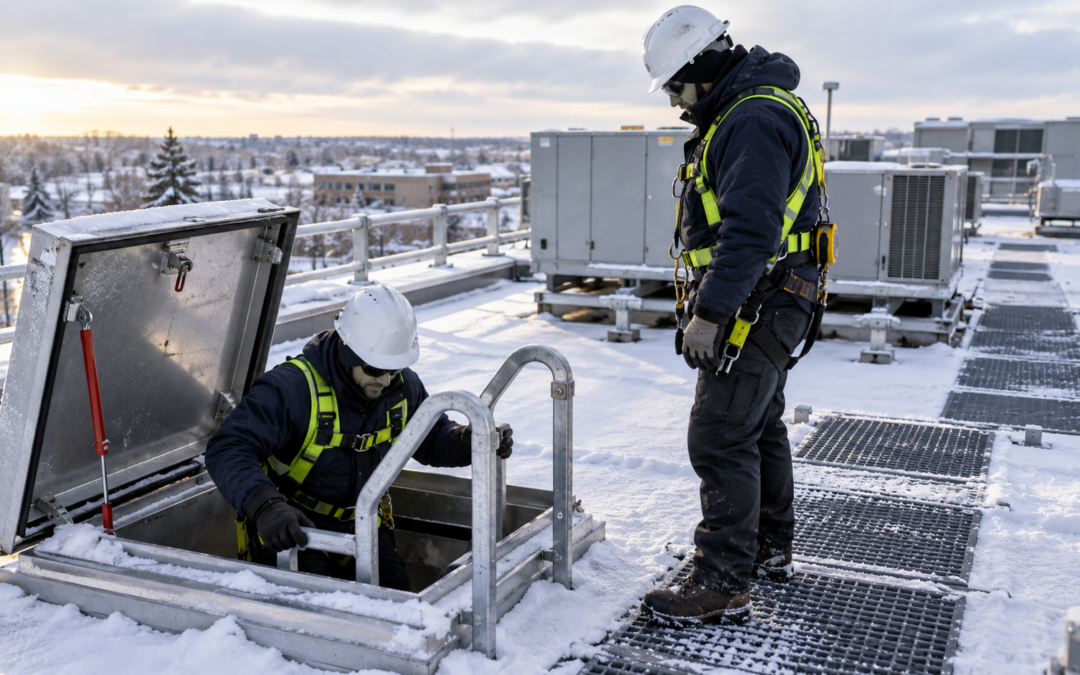
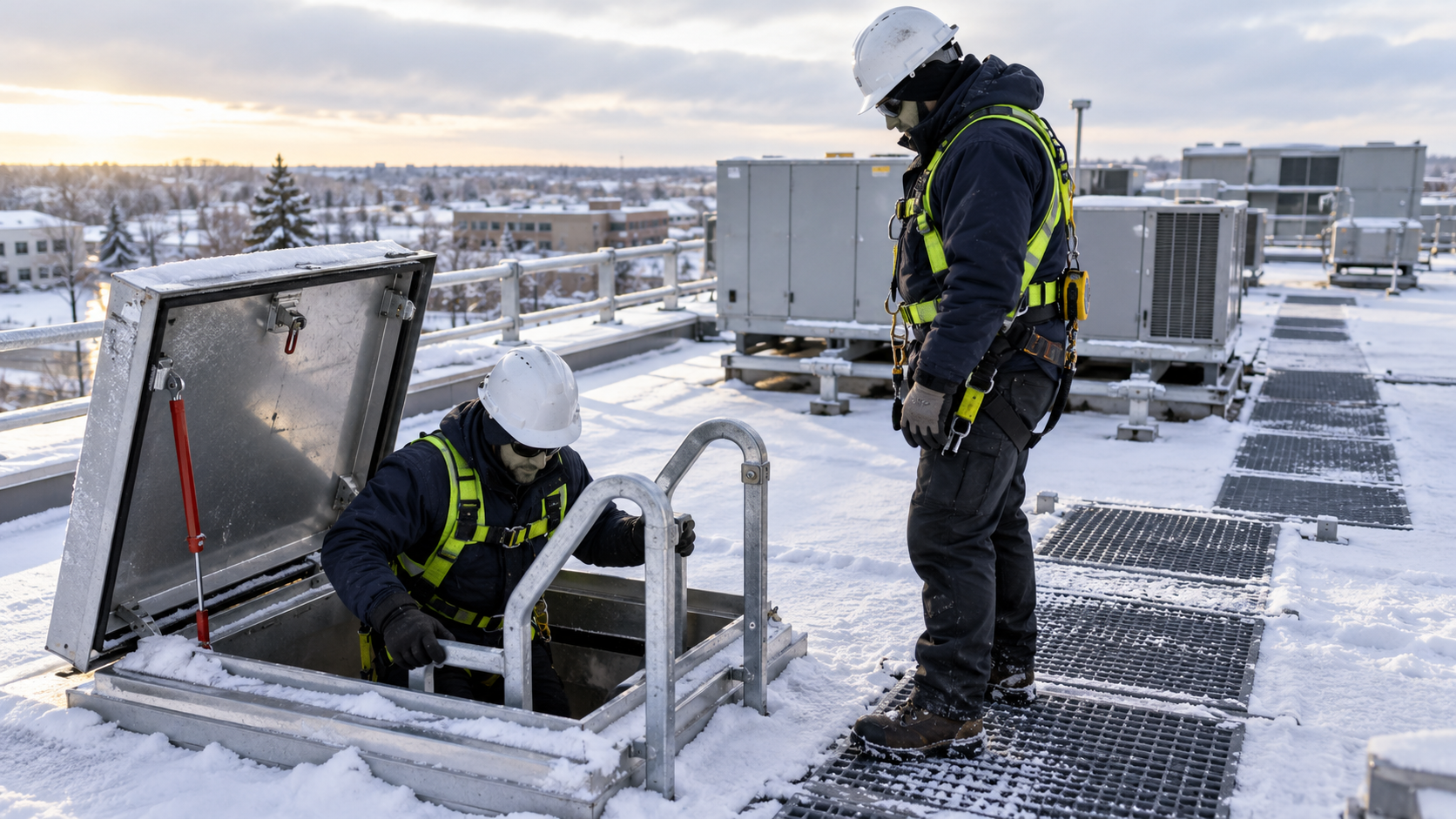
Why Safe Roof Access Matters Before an Emergency
When a commercial roof begins leaking, building owners want one thing:
Someone to get up there and fix it.
But what happens when the roof hatch is frozen shut?
Or the access ladder is covered in ice?
Or snow makes it impossible to identify a safe path across the roof?
Commercial roofing emergencies are difficult enough without unsafe access becoming another problem.
As temperatures begin dropping, now is the time to think about how roofing professionals will safely reach your roof when winter weather arrives.
Roof Access Is Part of Roof Maintenance
Most commercial roofing maintenance focuses on the roofing system itself.
Seams. Flashings. Drains. Penetrations.
But the ability to safely access those areas is just as important.
A roof may need a relatively straightforward repair, but that repair becomes more complicated when crews cannot safely reach the problem.
Fall offers an opportunity to identify access concerns while conditions are generally more favorable.
1. Check Your Roof Hatch
Many commercial buildings use interior ladders and roof hatches for rooftop access.
These hatches are exposed to the weather year-round.
Before winter, have qualified personnel check for:
- Damaged or deteriorated seals
- Corrosion
- Loose hardware
- Problems with hinges
- Damaged latches
- Obstructed access
- Water intrusion around the hatch
A hatch that opens properly in October should not automatically be assumed to function the same way after freezing rain.
A professional should address operational problems before winter conditions make access more difficult.
2. Inspect Access Ladders
Access ladders deserve just as much attention.
A damaged or poorly maintained ladder can create a serious safety hazard.
Look for:
- Loose mounting hardware
- Bent or damaged rungs
- Corrosion
- Missing safety components
- Obstructions
- Slippery access areas
The Occupational Safety and Health Administration emphasizes safe ladder use and proper fall protection when workers access roofs, particularly during snow and ice removal operations. OSHA
A roof emergency should never require someone to use an unsafe ladder.
3. Plan for Ice
Winter changes how workers move across rooftops.
Even a relatively flat commercial roof can become extremely slippery when frost, snow or ice develops.
OSHA identifies winter slips and falls as serious workplace hazards and recommends appropriate footwear, training and clearing safe walking surfaces where feasible. OSHA
Before winter, building owners should work with qualified professionals to identify safe access procedures.
That may include designated access routes, appropriate fall protection and procedures for evaluating weather conditions before rooftop work.
Not every roof can be accessed safely during every winter storm.
Knowing that ahead of time allows facility managers to plan accordingly.
4. Know Where the Hazards Are
Commercial rooftops can contain hazards that are difficult to recognize when covered in snow.
These may include:
- Skylights
- Roof edges
- Elevation changes
- Roof openings
- Equipment supports
- Low obstacles
- Areas with questionable decking
Skylights deserve particular attention.
They may look like solid roof surfaces when covered by snow, but they can create serious fall hazards.
OSHA requires appropriate protection against falls through roof openings, including skylights, under applicable workplace standards. OSHA
A professional roof-access plan should identify these hazards before they become hidden.
5. Keep Access Routes Organized
Commercial roofs often contain extensive mechanical equipment.
During an emergency, roofing professionals may need to travel across the roof to reach a leak or damaged section.
Clear, designated access routes make that process easier to plan.
Facility managers should consider:
- Where crews enter the roof
- How they reach frequently serviced equipment
- Whether access routes contain obstacles
- Where fall protection may be required
- Whether stored materials restrict movement
- How emergency work can be performed safely
Existing walkway pads can help protect membranes from repeated traffic, but they are not a substitute for appropriate fall protection or safe walking conditions.
6. Coordinate With Other Contractors
Roofers are not the only professionals who may need rooftop access during winter.
HVAC technicians, electricians and mechanical contractors may also need to reach equipment.
Make sure everyone understands the building's access procedures.
A facility manager should know:
Who is authorized to access the roof?
Where is the approved access point?
What safety procedures apply?
Who should be contacted if equipment or roofing materials are damaged?
Good communication reduces confusion when an urgent problem develops.
7. Prepare for Emergency Repairs
Imagine discovering a roof leak on a freezing January morning.
Water is reaching inventory, office space or expensive equipment.
You need help immediately.
But the roofing contractor also needs information.
Before winter, facility managers should have the following readily available:
- Building address and access instructions
- Roof hatch or ladder location
- Authorized building contact
- Emergency contact information
- Known rooftop hazards
- Previous roof inspection reports
- Roof system information
- Recent repair history
Accurate information can help roofing professionals evaluate the situation and determine an appropriate response.
8. Know When Not to Go
Sometimes the safest decision is to delay rooftop access.
Heavy snow, freezing rain, strong winds or uncertain roof conditions may make work unsafe.
The National Roofing Contractors Association specifically identifies cold-weather hazards involving fall-protection equipment, including the potential for ice to interfere with certain self-retracting lifelines. National Roofing Contractors Association
Safety should never be sacrificed simply because a roof is leaking.
When roof access is temporarily unsafe, facility managers can focus on protecting building occupants, controlling interior damage where safe and coordinating the next steps with qualified professionals.
Winter Roof Access Checklist
Before colder weather arrives, have qualified personnel review:
- Roof hatch condition
- Fixed ladders and access equipment
- Fall-protection provisions
- Skylights and roof openings
- Designated access routes
- Rooftop obstructions
- Emergency contact information
- Building access procedures
The goal is to identify problems before an emergency makes them urgent.
Safe Access Means Better Preparation
Winter roofing emergencies are unpredictable.
But preparing for them doesn't have to be.
A well-maintained access point, clear procedures and an understanding of rooftop hazards can help building owners respond more effectively when trouble develops.
At Commonwealth Roofing Corp., safety is not something we consider only after reaching the roof.
It is part of the process from the beginning.
Our team understands the importance of protecting people, property and building operations while identifying the right roofing solution.
Before winter arrives, make sure your building is prepared for more than just the weather.
Make sure qualified professionals can evaluate and access your roof safely when needed.
Safety, Service, & Quality — every day since 1981.
Louisville: (502) 459-2216
Hebron: (859) 943-0012
Service: (888) 818-4842